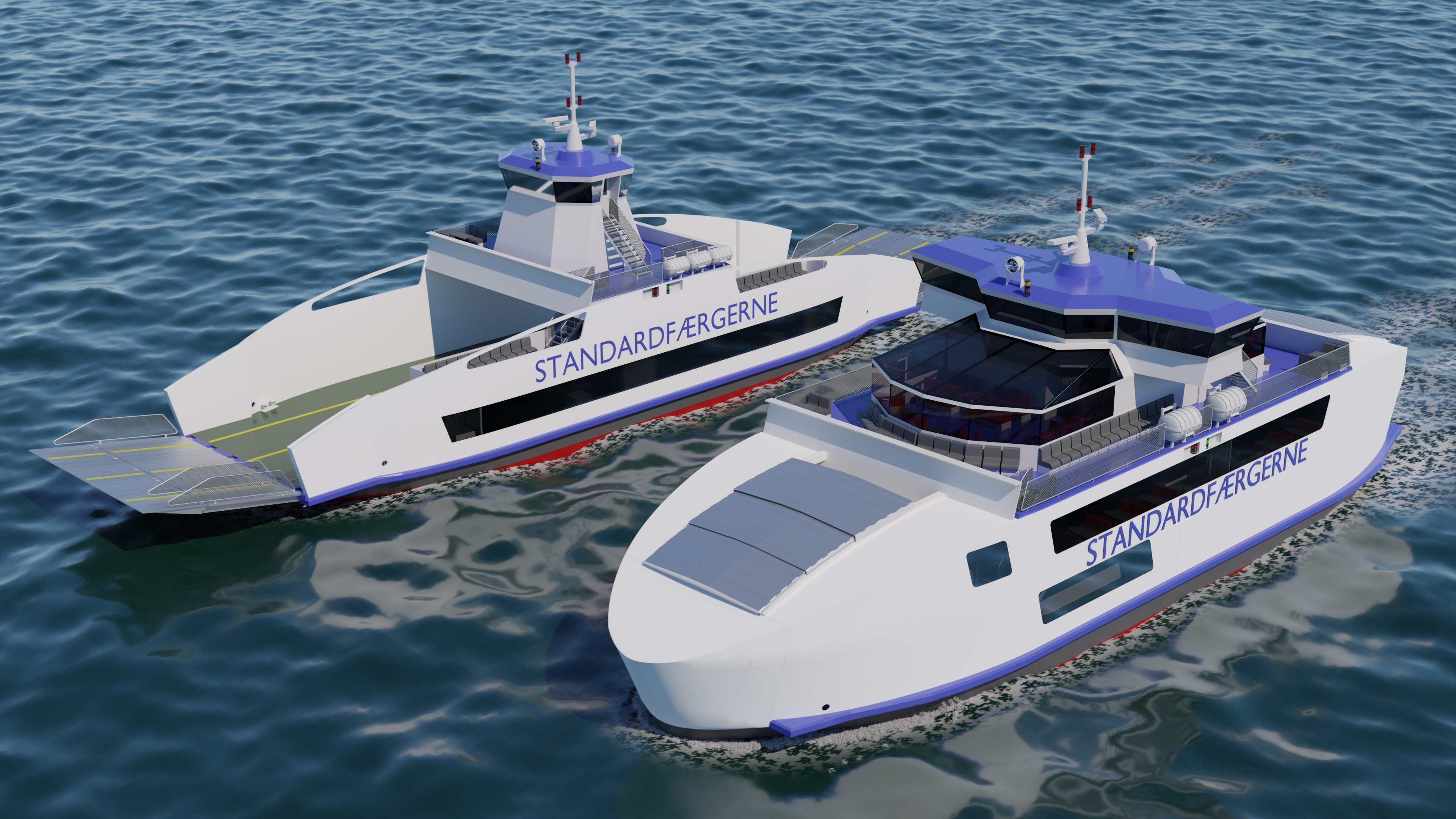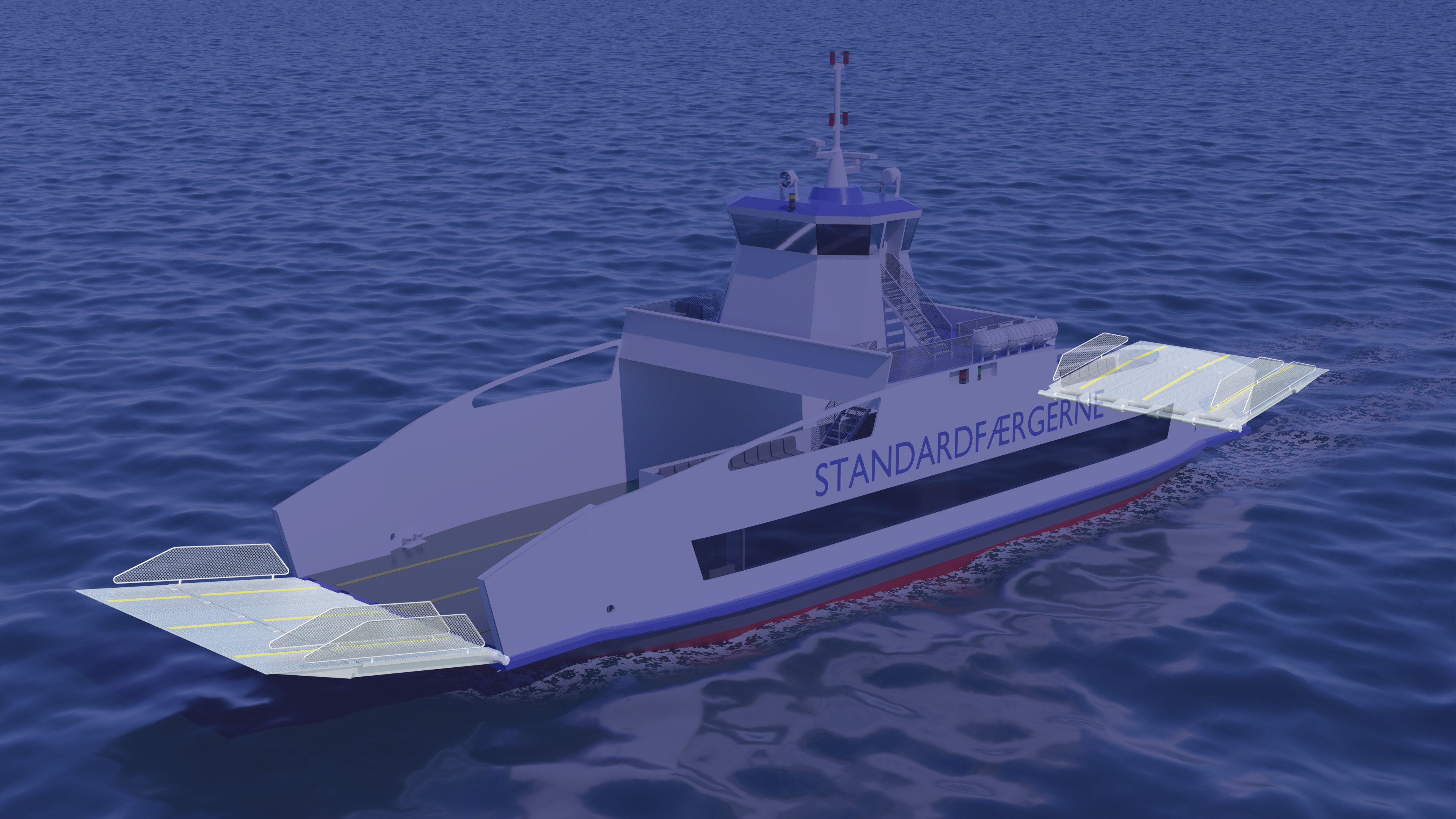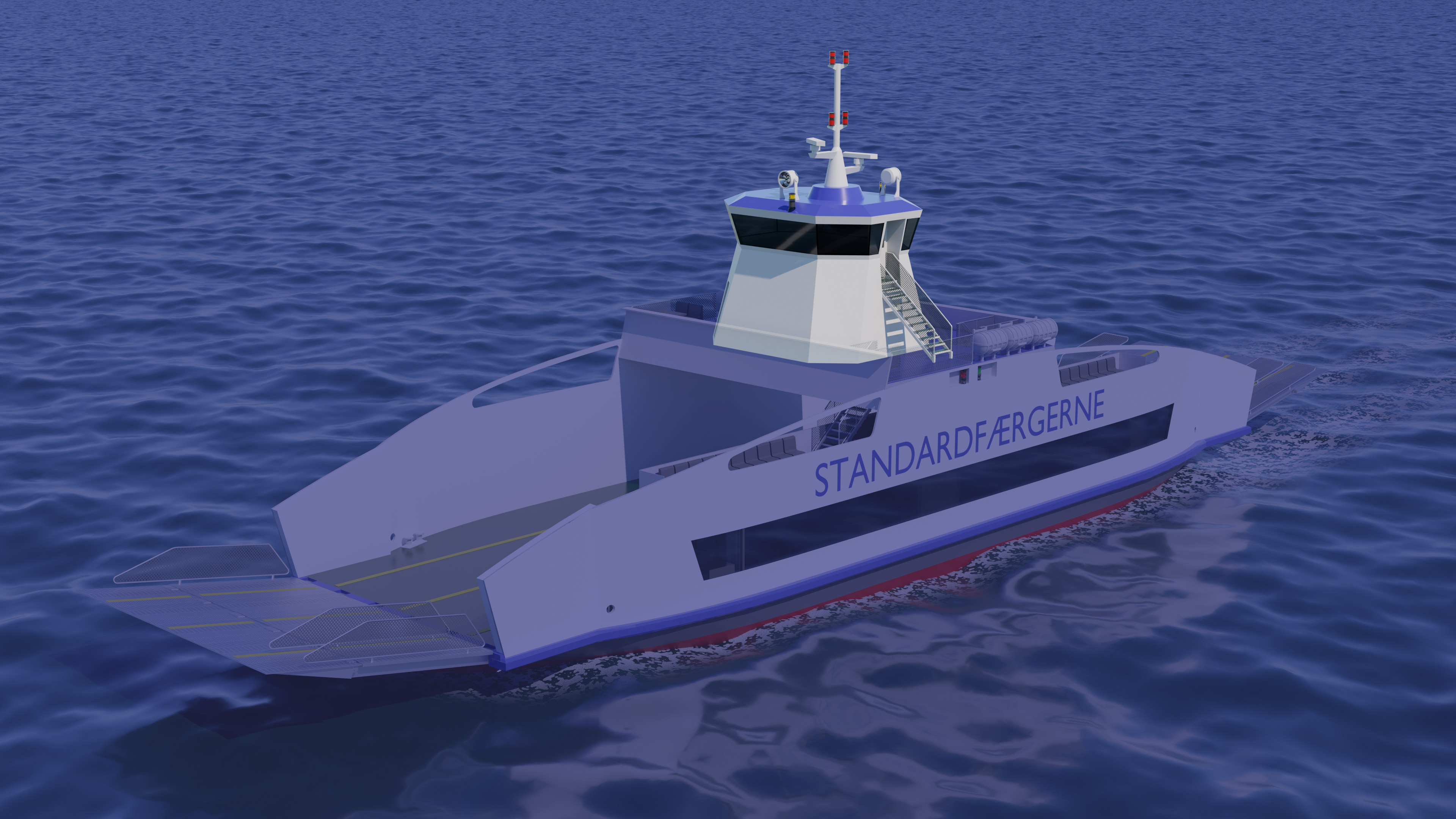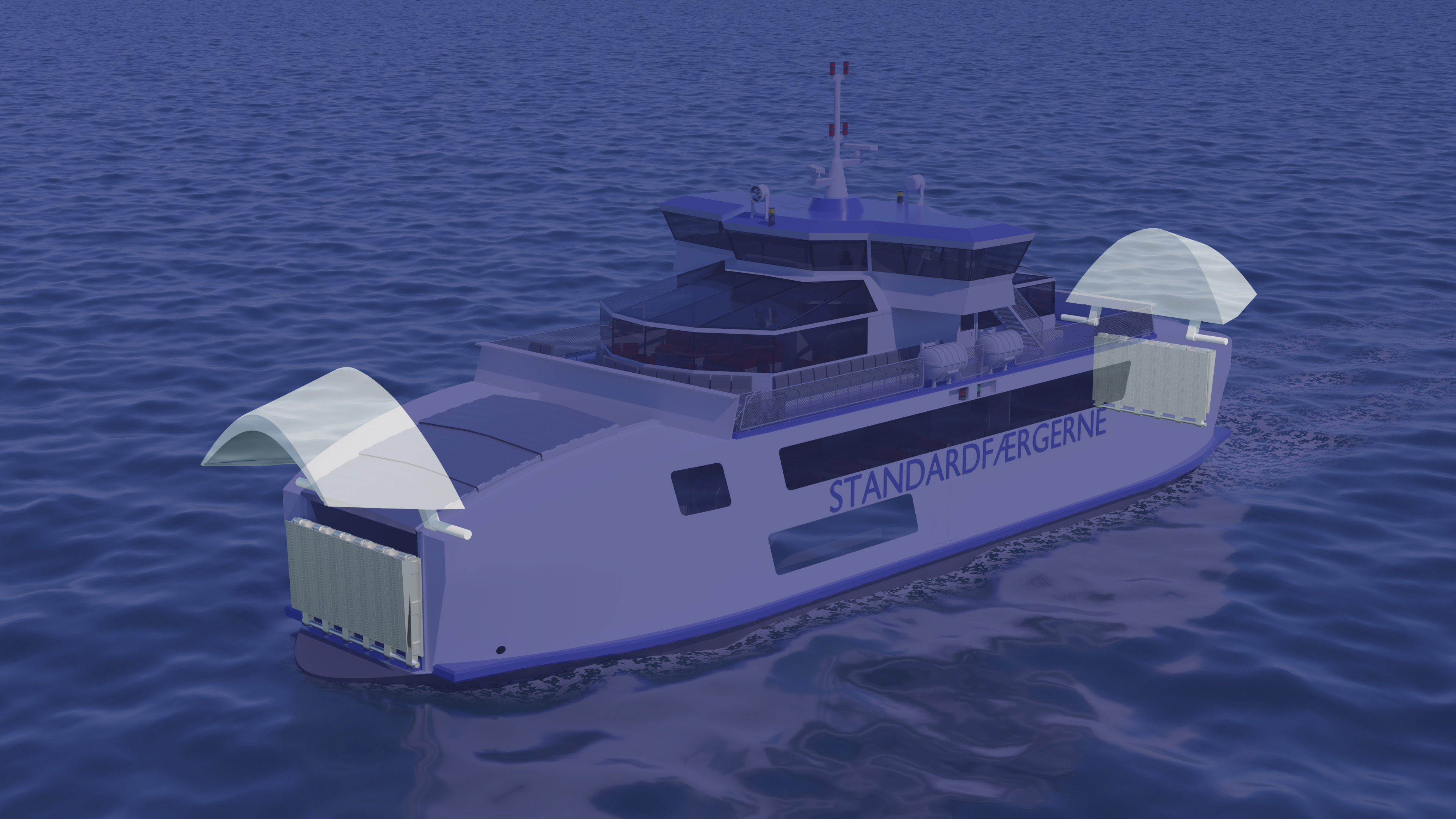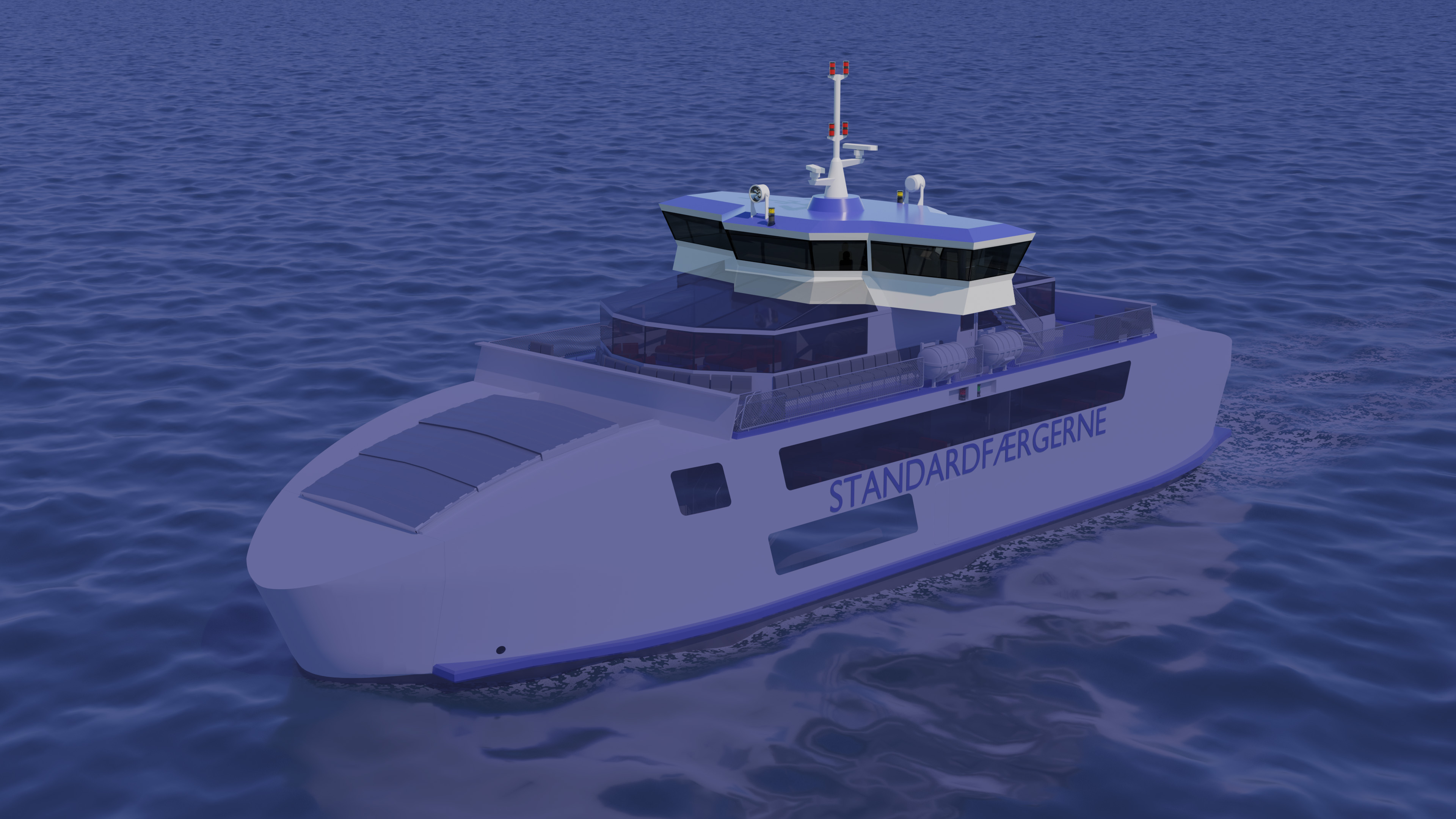
The standard ferry concept is a platform solution where the ferries are customized to local needs through the combination of standardized modules, while achieving economies of scale by merging procurement and construction processes for multiple ferries. The concept will strengthen intermunicipal cooperation and operational reliability on individual ferry routes, as well as contribute significantly to the reduction of Denmark’s CO2 emissions. The concept has been developed by Danish Standard Ferries.
With the aim of optimizing the operation of small ferries in Danish domestic ferry services in collaboration with municipalities, the Ferry Secretariat was established in 2015 based on a decision by the Danish Parliament. The standard ferry concept with new green electric ferries originates from this task.
The idea was not entirely new; in 1995, a report titled “Smaller Danish Ferries – Past, Present, and Future” was produced under the auspices of the Danish Maritime Authority through a project, highlighting the advantages of standardization for Danish domestic ferry services. A few years ago, Claus Jensen, Chairman of Dansk Metal, and the late senior representative Torben Andersen from OMT, together with the Ferry Secretariat, initiated a kickoff meeting with a number of mayors to explore the possibilities for standardization and achieving economies of scale. With their experiences as union representatives and directors at the former Lindø Shipyard, both were aware of the benefits of series production.
The Ferry Secretariat tendered an innovation partnership in 2020, which was won by Danish Standard Ferries in 2021. Danish Standard Ferries is a consortium between OMT and PensionDanmark, created and managed by Maritime Equity Partners. By that, the standard ferry concept was launched.
Five municipalities have already started designing green standard ferries, and another five municipalities are considering similar projects. Finally, a solid course has been set toward the goal of green optimization and achieving economies of scale in Danish ferry operations.
The Ferry Secretariat, Slagelse Municipality, Aalborg Municipality, Faaborg-Midtfyn Municipality, Svendborg Municipality, Odder Municipality, and Danish Standard Ferries are pleased to announce that the tender for the construction of five new Standard Ferries has been published.
This is a significant milestone in the green transition of domestic ferry services in the Danish island municipalities, where five pioneer municipalities together take an important step towards acquiring new battery-electric ferries, which will contribute to a significant reduction in the municipalities’ own CO2 emissions.
The project is based on the Standard Ferry concept, provided by Danish Standard Ferries, where the municipalities will receive a standardized ferry solution tailored to each municipality’s crossing needs. A significant part of the key components has already been sourced with several Danish companies as subcontractors.
The Standard Ferry concept also includes the development of a common operational support system, which will contribute to the efficient operation of the ferries.
This milestone marks the first step in the standardization of domestic ferry services in the Danish island municipalities, where the Standard Ferry concept forms the framework for greater efficiency, more collaboration, and thus economies of scale across the individual crossings operated by the individual municipalities.
“The Ferry Secretariat has helped create a framework for inter-municipal cooperation, so the municipalities receive a targeted offer for green and efficient ferry operations. It is very satisfying that five municipalities have come together within this framework and are now so far along that they have been able to tender the construction of the ferries.”
“We are firmly convinced that we achieve the best solution by standardizing and doing it together. Now we look forward to receiving the bids from the shipyards based on the joint work. We expect that standardization, along with the fact that we are five ferries, will create the basis for gains both in the construction phase but not least in the coming 20-25 years, where the ferries will provide valuable infrastructure on their respective crossings.”
“We are extremely proud to have reached this important milestone for the Standard Ferry project, which marks the next step towards green standard ferries in the Danish island municipalities. And we are incredibly pleased that, together with the five pioneer municipalities and the Ferry Secretariat, in close cooperation, we can now embark on the next phase of identifying the shipyard that will build the first Danish standard ferries.”
The standard ferry concept was developed and is provided by Danish Standard Ferries K/S, and in 2023 five pioneer municipalities signed a procurement agreement for the joint construction of ferries for their municipal routes:
Aalborg Kommune:
Hals – Egense
Odder Kommune:
Hou – Tunø
Faaborg-Midtfyn Kommune:
Faaborg – Lyø – Avernakø
Svendborg Kommune:
Svendborg – Skarø – Drejø
Slagelse Kommune:
Stignæs – Omø
The ferries in the standard ferry concept shares identical hulls, with the possibility of adapting the superstructure to the individual municipality’s needs through modularization. In addition, main components are identical across the ferries, such as batteries, charging system, bridge equipment, navigation and communication systems, propulsion units, and liferafts. All to achieve a high level of standardization.
As the ferries will use battery as source of energy, the concept supports the municipalities goals of reducing emissions towards 2030.
The concept allow the individual municipalities to achieve synergies and economies of scale through consolidated design, procurement and construction processes, and further increases operational reliability as a shared service and maintenance plan for the main components can be shared across the municipalities.
To support the ferry operation, the concept also includes an operational support center, which all municipalities under the Ferry Secretariat will be able to access, to optimize operations and allowing for cross-municipal collaboration.